
And the Creek Don’t Rise
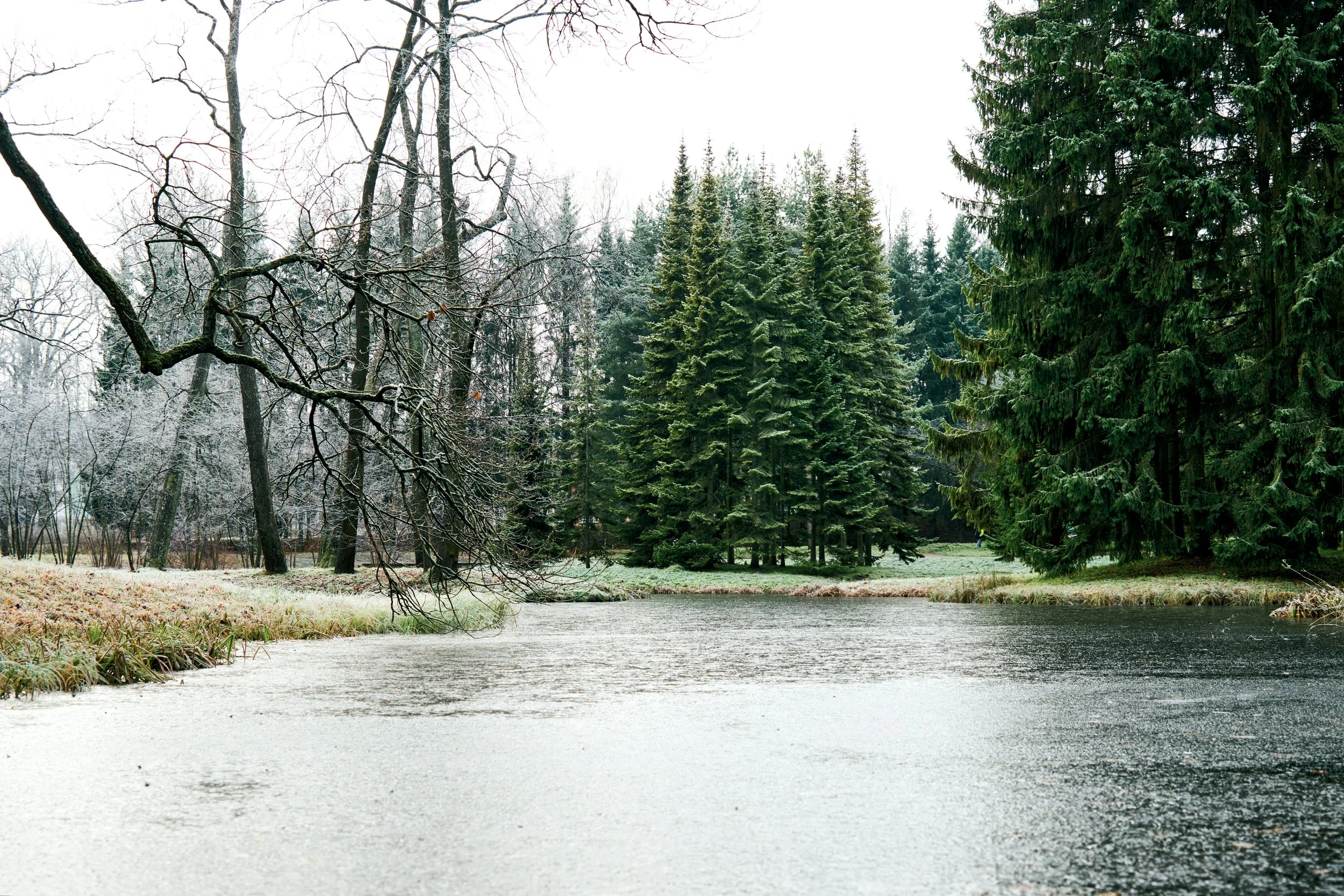
“God willing and the creek don’t rise!”[1] we used to say. This meant we would move forward as planned unless some extreme event prevented normal function. Houston’s many creeks were regularly one heavy rain away from flooding roads and neighborhoods, so it always felt like a relevant saying. We sometimes used it as if to say, “well, here’s hoping!” as we waited for that other disruptive shoe to drop.
Each morning, I check the weather and the news. Between the two, it seems that the creek is indeed rising!
In this second bout of atmospheric river, we are especially mindful of our neighbors in areas that are already flooded, where the roads have already washed out, and where recovery work had just begun after the first heavy rains.
As for the news, each day brings information indicating that we step farther and farther from ‘normal function’ as people struggle, budgets are in disarray, governing bodies cannot agree, and violence headlines more often than not.
That Appalachian saying doesn’t indicate what one is to do, should the creek indeed rise. But both when we lived in Houston and here in Portland, I’ve seen people know exactly what to do: we pull each other out of the water.
When neighborhoods flood, we open our spaces for safety and comfort. We take collections. We follow instructions to *not drive on flooded roads.*
When a deluge of difficult developments threatens our neighbor’s ability to peacefully thrive in our shared community, we put out the call for support and solidarity. We stand shoulder-to-shoulder so we all know that no one goes through this alone. We advocate at every level we can.
When the creek rises, we pull each other out of the water.
Sometimes, that water is metaphorical. We join hands to pull one another out of the struggle, the deluge, just as God’s people have done for millennia. The very core of the Christmas celebration, that God is with us in Emmanuel, centers around our shoulder-to-shoulder struggling together. Christ who by his incarnation experienced every joy and sorrow of this human life extends his hand when we feel we are drowning, and we extend our hands to all in whom Christ’s light shines.
This Christmas Eve, in addition to the joyful and tender worship we will host in our Sanctuary at 7pm and 9pm, many from First Church will also join our Methodist and ecumenical siblings outside the ICE building for Christmas Eve services at 2pm and 11pm.
That we would gather outside the ICE building to celebrate the light in this dark period of our treatment of our migrant siblings, that brings us hope.
That we would gather outside the ICE building to honor the birth of the Christ child who had no ready place, whose parents fled to another country for his safety, who was born against cultural norms under the shadow of a ruthless empire, that brings us resolve in our resistance.
The witness of each public action we take at the ICE building is three-fold:
It says to our migrant siblings, you are not alone.
It says to others who believe it is wrong to treat humans inhumanely: you are not alone.
And it says to all, including ourselves, that the Christian witness abides only in love, not cruelty, only in what is just, not unjust, only in hope, not fear.
If I am honest, there is a fourth purpose that we don’t always place as much hope in: to remind those carrying out detentions that they need not be cruel or violent; that the folks they are dragging from their homes or jobs or at school drop off are all our neighbors.
If any of this resonates with you, you are invited to join us for Christmas Eve at the ICE facility at 2pm or 11pm. More information and RSVP can be found here.
A note about safety and the current status of the ICE facility on Macadam
Our daily morning clergy presence, biweekly Neighbor-to-Neighbor Interfaith Witness services, and many other actions of public witness at the ICE Facility on Macadam have been sacred and safe. However, evenings are sometimes different. There have been a number of evening public witness events without incident, such as the Blue Christmas vigil, but nightfall makes it harder to predict who will be present and how they or federal agents may act.
If you choose worship at the Macadam facility - and especially if you attend the 11pm service - please care for your safety. It is hosted by our connectional and ecumenical siblings and we will have First Church clergy, staff and worship leaders at both services, but they and I cannot guarantee safety. There are increasing opportunities for action and advocacy in every neighborhood, so do not feel that this is your only chance to speak out.
When the creek rises, we pull each other out of the water.
Sometimes, the water we pull each other out of is very physically real. Bishop Cedrick Bridgeforth updated the Greater Northwest Area on how to help those whose creeks rose, levees breached, or roads washed out:
“Amid this unfolding crisis, United Methodist churches across our region are already responding. Congregations are opening their doors to evacuees, offering parking for displaced families, distributing relief supplies, and partnering with local response agencies to meet immediate needs. This is holy, faithful work—and it is happening now.
We invite you to respond with urgency and generosity by supporting the Pacific Northwest Conference Disaster Fund (Advance #352) or the UMCOR Advance #901670. Gifts to these funds help provide immediate assistance to evacuees and survivors, as well as prepare for continued response, including the possible deployment of Early Response Teams as conditions allow. You can give online at https://pnwumc.org/floodresponse”
When the creek rises, we pull each other out of the water.
Amidst it all, we worship the One who guides our hands as we help each other and as we ourselves are helped, living into that Beloved Community where all belong to each other.
I look forward to celebrating the birth of Christ with you in the Sanctuary or online at 7 or 9pm, and perhaps at the ICE building as well!
In solidarity,
Pastor Karyn
[1] I say this phrase as our Appalachian siblings intended when referencing their unpredictable extreme rain, though according to Wikipedia, “More recently it has been claimed that the word "Creek" refers not to a geological feature but rather to the Creek Indians.[1] However, this is unlikely.”